Notes on Texture, Calm Geometry, and the Art of Living with Space
This journal is a quiet space for reflection - exploring texture, materiality, and the relationship between art and the space.
Texture is not ornament, but presence.
Geometry is not rigidity, but rhythm.
Art is not an object apart, but something that lives alongside space.
JOURNAL
1. On Texture and Presence ( 2025 )
Texture does not announce itself. It settles quietly into a surface, holding light, shadow, and depth over time. Often felt before it is consciously noticed, texture shapes how a space is experienced—rather than how it is seen.
In my practice, texture is not an added element. It is the beginning.
Presence Beyond Form
Form gives structure, but texture gives presence. It grounds a work within its environment, allowing it to belong rather than stand apart. A textured surface absorbs light differently, softens edges, and introduces a subtle sense of weight—qualities that are sensed rather than immediately observed.
This quiet presence creates intimacy. Not by demanding attention, but by offering stillness.
The Language of the Handmade
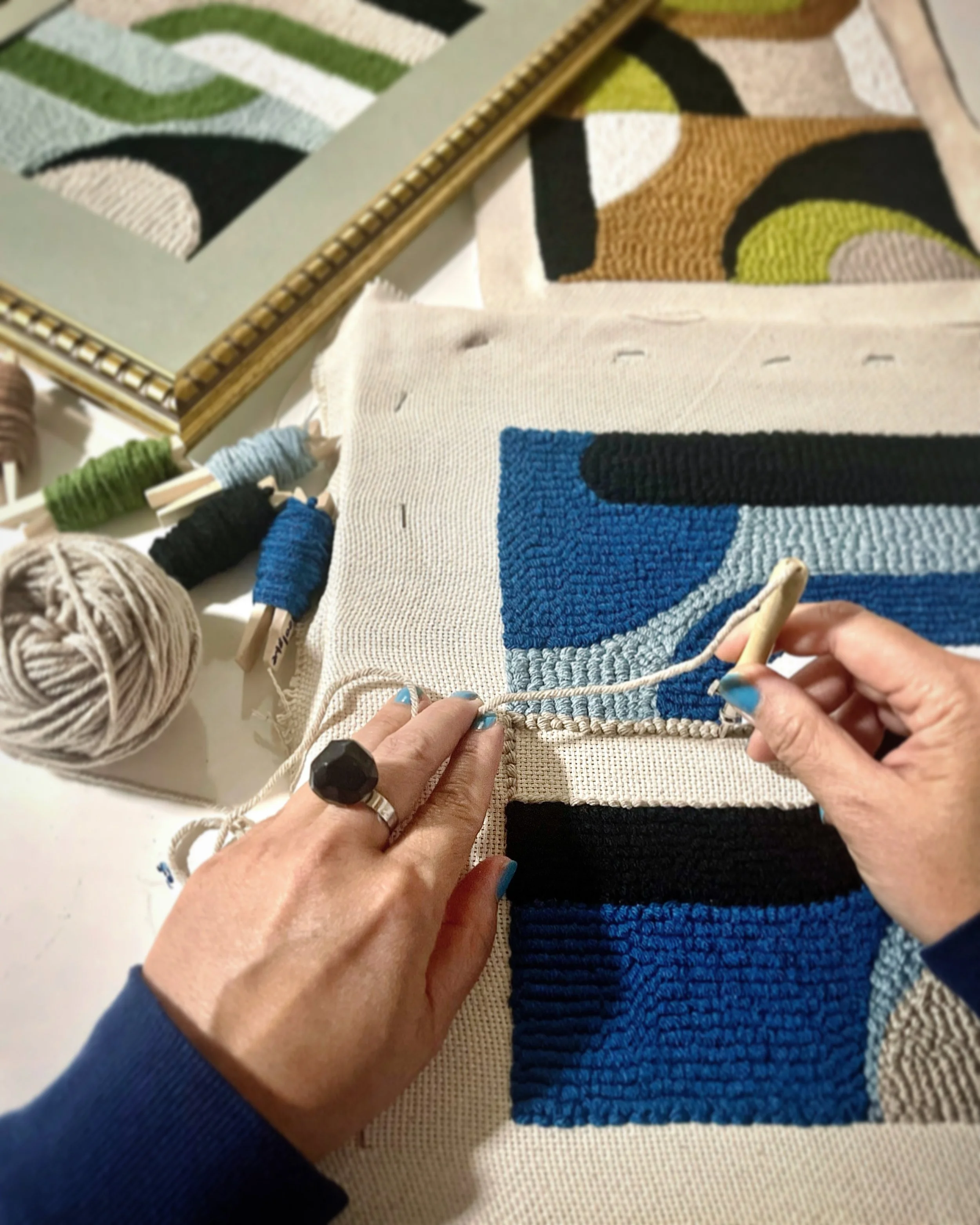
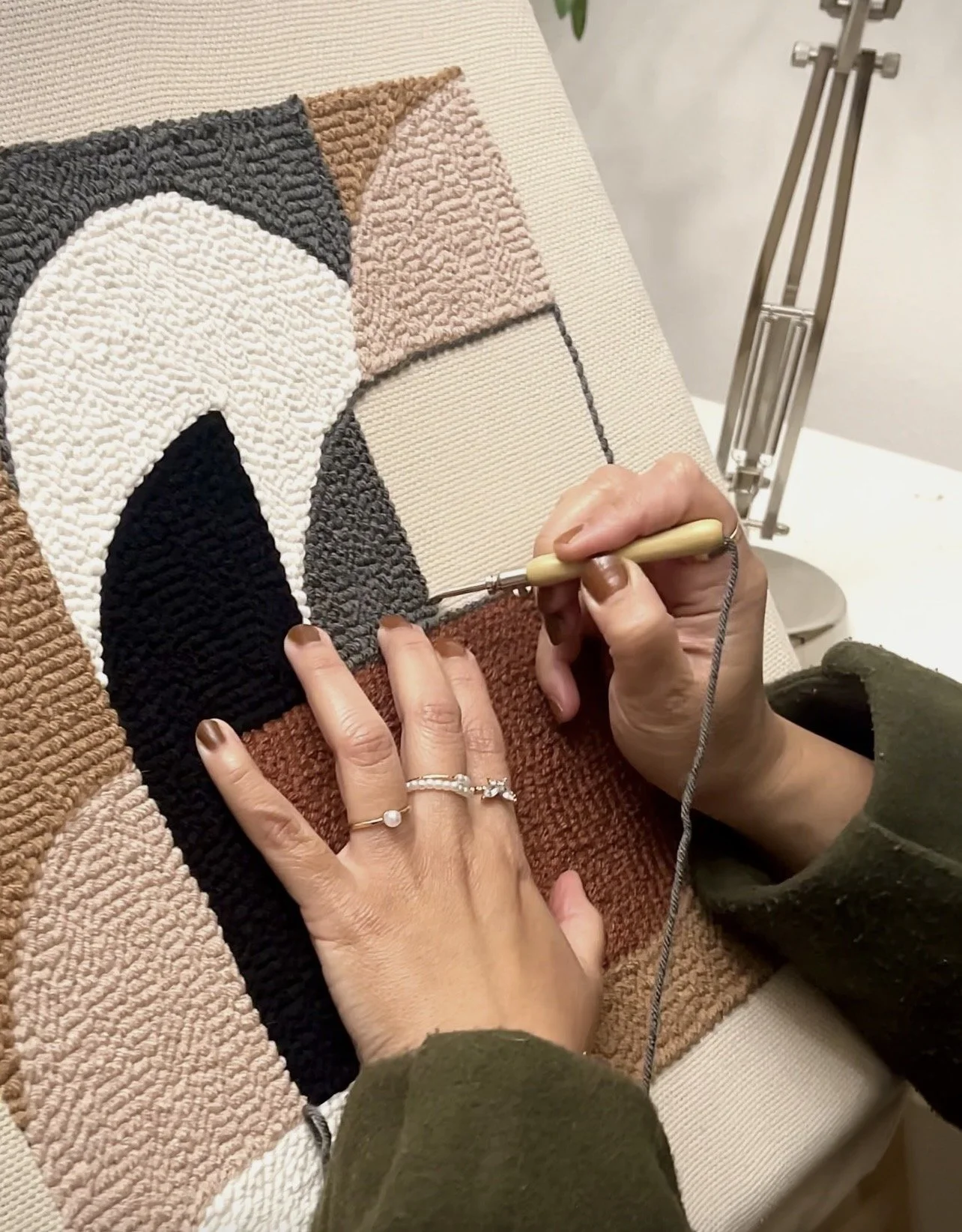
Handmade processes carry time within them. Each mark, stitch, or layered surface records moments of attention—pressure applied, gestures repeated, pauses allowed. These traces are not imperfections to be corrected, but evidence of presence.
Working by hand allows texture to emerge slowly. Variations remain visible, forming a surface that feels human and grounded. Through this process, material becomes a language—one that speaks softly, without uniformity or excess.
Texture in Dialogue with Light
Texture is never static. It responds continuously to light and shadow, shifting throughout the day. Morning light reveals softness. Midday light sharpens relief. Evening shadows deepen the surface, changing perception once again.
Because of this, textured works invite repeated encounters. They reveal themselves over time, encouraging a slower relationship between the artwork and the space it inhabits.
Quiet Strength in Contemporary Spaces
In contemporary interiors, restraint often carries the greatest impact. Rather than acting as focal points, textured works support the atmosphere. They create balance—allowing architecture, objects, and movement to coexist harmoniously.
Texture introduces warmth without excess and complexity without noise. It becomes a steady presence, one that supports daily rituals rather than interrupting them.
Presence as Intention
Choosing texture is a deliberate act. It prioritizes experience over immediacy, depth over surface appeal. Presence, in this sense, is not about visibility, but resonance—how a work remains with you after the first glance has passed.
The pieces I create are meant to be lived with. They are not statements, but companions—quietly grounding a space through time.
Texture allows this belonging.
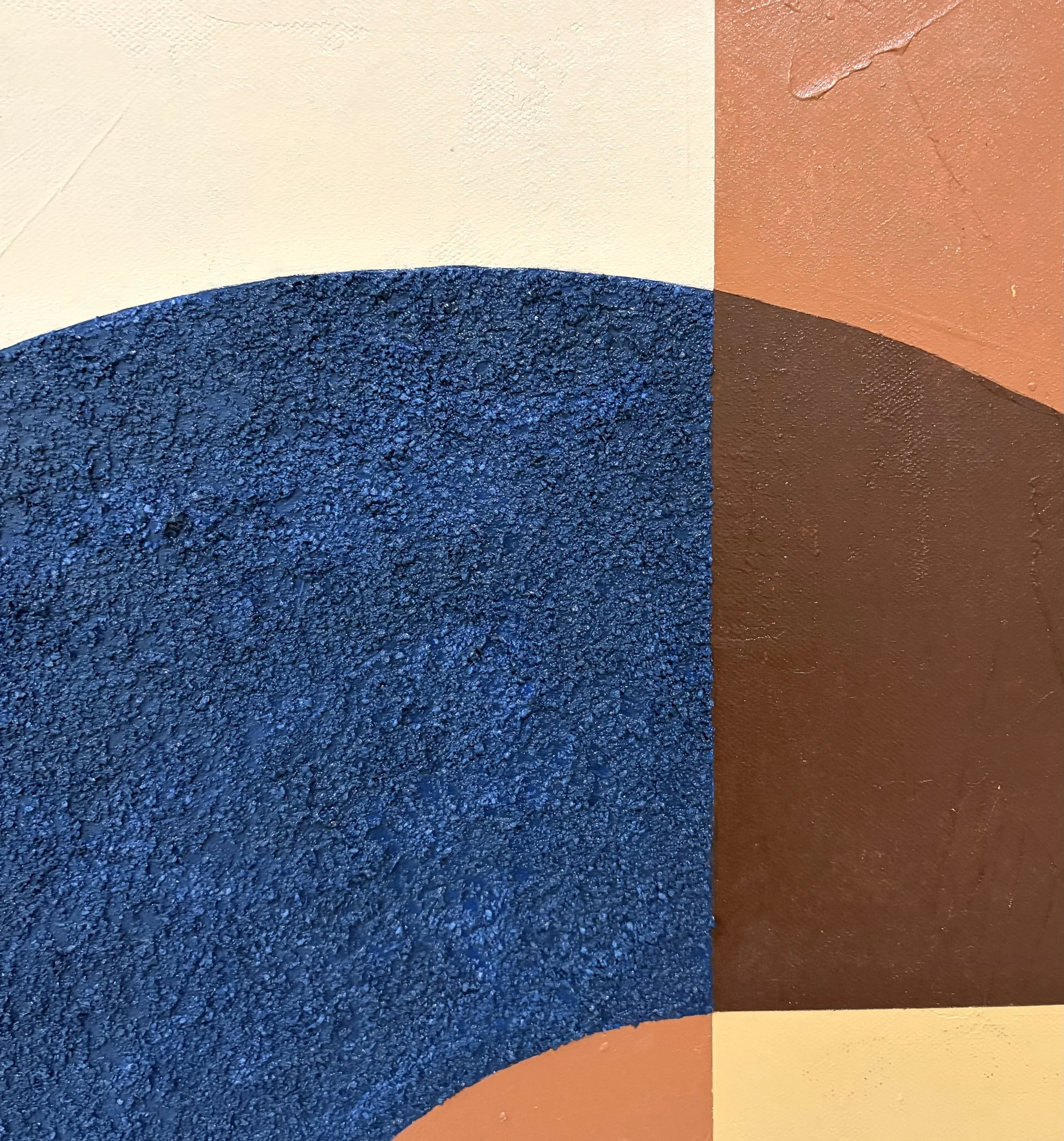
2. Calm Geometry and Visual Rhythm ( 2025 )
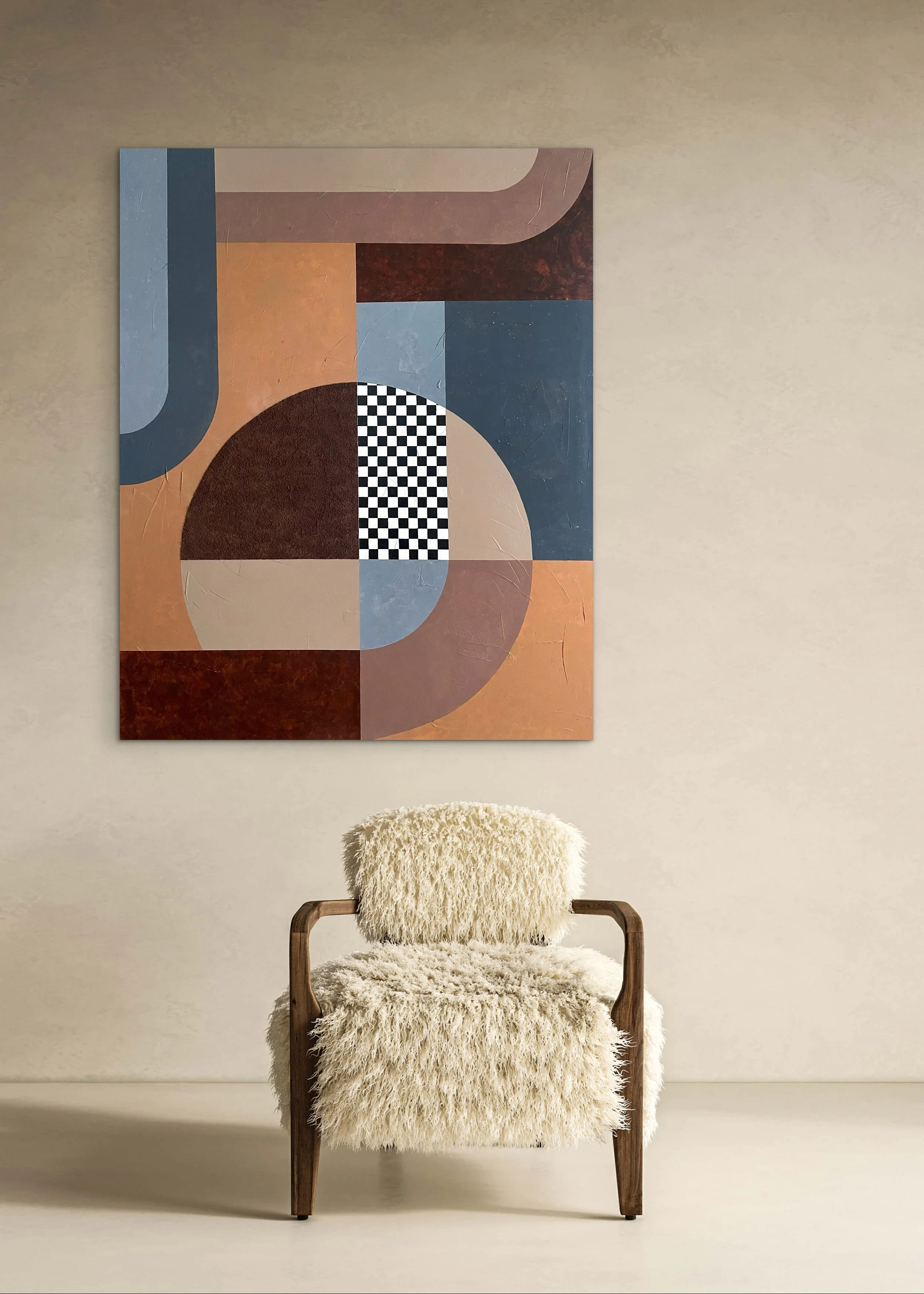
Geometry is often associated with precision and control. Yet, when softened, it becomes something quieter—less about structure, more about rhythm. In my work, geometry does not impose order; it offers balance.
Calm geometry creates a visual language that allows the eye to rest.
Geometry as Structure, Not Statement
Geometric forms provide an underlying framework. Lines, arcs, and repeated shapes give a composition clarity, but they are never intended to dominate. Instead, they function as a subtle guide—holding space gently rather than defining it rigidly.
This restraint allows geometry to remain present without becoming insistent. The work feels composed, yet open. Defined, yet breathable.
Visual Rhythm and Repetition
Rhythm emerges through repetition. When forms return—slightly altered, softened, or spaced—they create movement without urgency. The eye travels slowly, finding familiarity rather than contrast.
This rhythm mirrors natural patterns: waves, shadows, architectural intervals. It invites sustained looking rather than immediate impact, encouraging a relationship that unfolds over time.
Softening the Line
In my practice, geometry is rarely sharp. Edges blur, lines bend, and forms hold space with gentleness. This softening allows geometry to coexist with texture—structure meeting tactility.
The dialogue between the two creates equilibrium. Texture brings depth and presence; geometry offers calm orientation. Neither overwhelms the other.
Geometry in Relation to Space
Within an interior, calm geometry supports continuity. It resonates with architectural elements—walls, windows, proportions—without competing with them. The artwork becomes part of the spatial rhythm, echoing the quiet order already present in the room.
This integration allows the work to settle naturally. It does not interrupt movement or demand focus, but aligns with the pace of the space itself.
Rhythm as Stillness
Stillness is not the absence of movement. It is a movement held in balance. Calm geometry achieves this by slowing visual tempo—offering a steady cadence rather than contrast.
In this way, geometry becomes less about form and more about experience. A way of holding attention gently. A way of allowing space to breathe.
A Paired Language
When paired with texture, calm geometry completes the conversation. One grounds through tactility, the other through structure. Together, they create works that feel considered, quiet, and enduring.
This balance—between softness and order, presence and rhythm—is central to how my work exists within space.
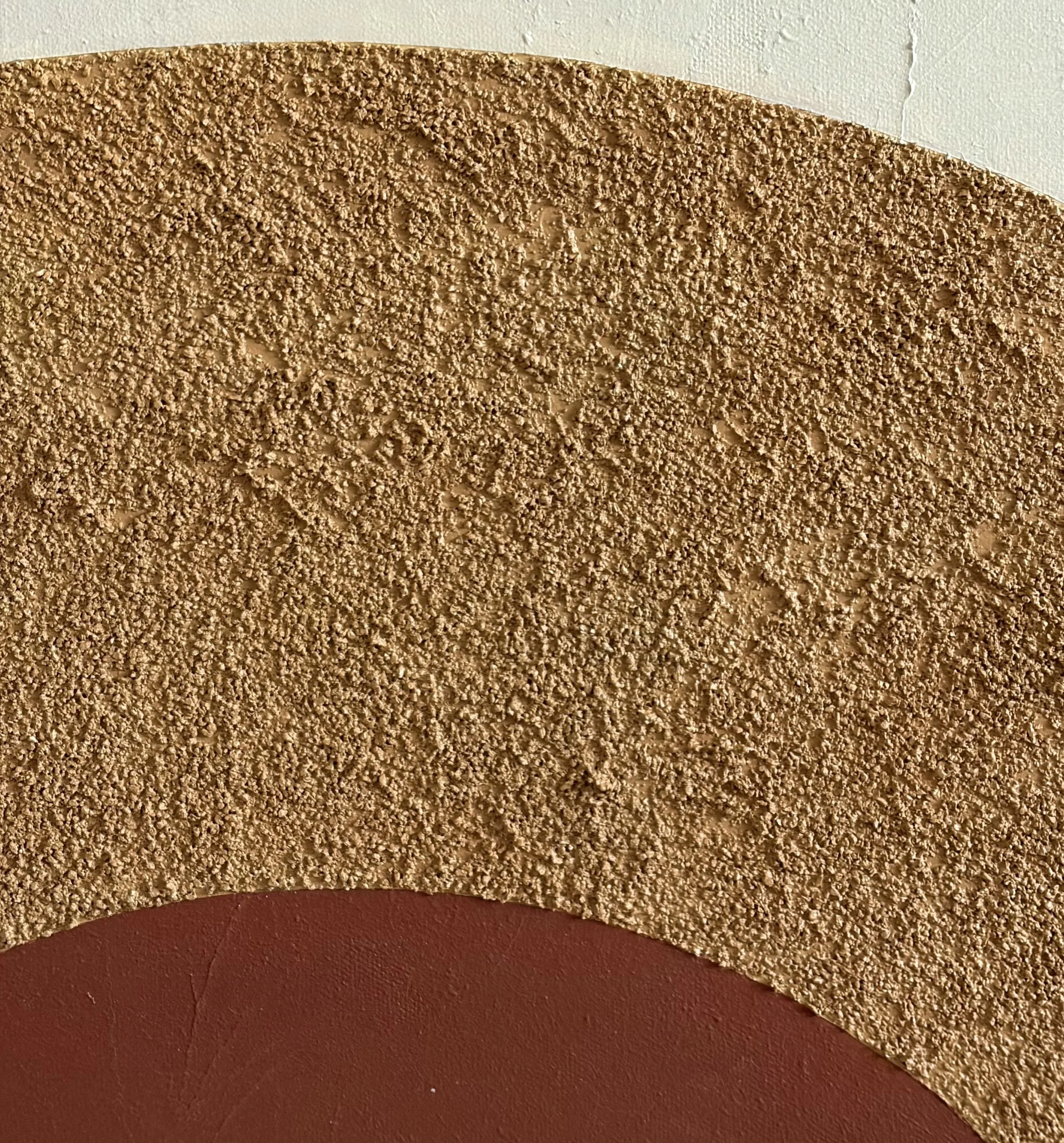
Texture communicates before language. It is felt through light, shadow, and proximity—often without conscious recognition. In this way, texture becomes a quiet form of dialogue between artwork, space, and body.
This dialogue unfolds slowly.
Sensation Before Interpretation
Before meaning is assigned, texture is sensed. A surface invites the eye closer, softens perception, and alters how light moves across a room. These sensory cues shape the atmosphere long before form or concept is fully understood.
Texture does not instruct. It allows.
Tactilit Without Touch
Even when untouched, texture is experienced physically. The eye reads depth. The body anticipates the surface. Light reveals relief and shadow, suggesting softness or density.
This implied tactility creates intimacy. It bridges distance without requiring interaction, allowing presence to be felt quietly and continuously.
The Role of Repetition and Variation
Texture emerges through repetition—layer upon layer, stitch after stitch. Small variations accumulate, forming surfaces that feel alive rather than static.
These variations are not decorative. They are rhythmic. They give the work breath, preventing uniformity from flattening experience. Through this rhythm, texture maintains its quiet voice.
Texture and Atmosphere
In spatial contexts, texture shapes mood. It absorbs excess sharpness, softens acoustics, and introduces warmth without visual noise. In calm interiors, this subtle modulation allows spaces to feel grounded and human.
Texture becomes atmospheric rather than focal—supporting the space rather than defining it.
A Language That Listens
Quiet languages do not seek attention. They listen first. Texture responds to its surroundings—light, scale, and proximity—adjusting how it is perceived over time.
This responsiveness allows textured works to remain relevant. They do not exhaust themselves in a single moment. Instead, they reveal depth through continued presence.
Holding Space Through Texture
Texture holds space gently. It does not compete with architecture or objects, but offers a steady counterpoint. Through its restraint, it allows other elements to exist more fully.
This is the role texture plays in my practice—not as embellishment, but as a way of creating connection without interruption.
3.Texture as a Quiet Language ( 2025 )
4. Handmade Surfaces and Slowness ( 2025 )
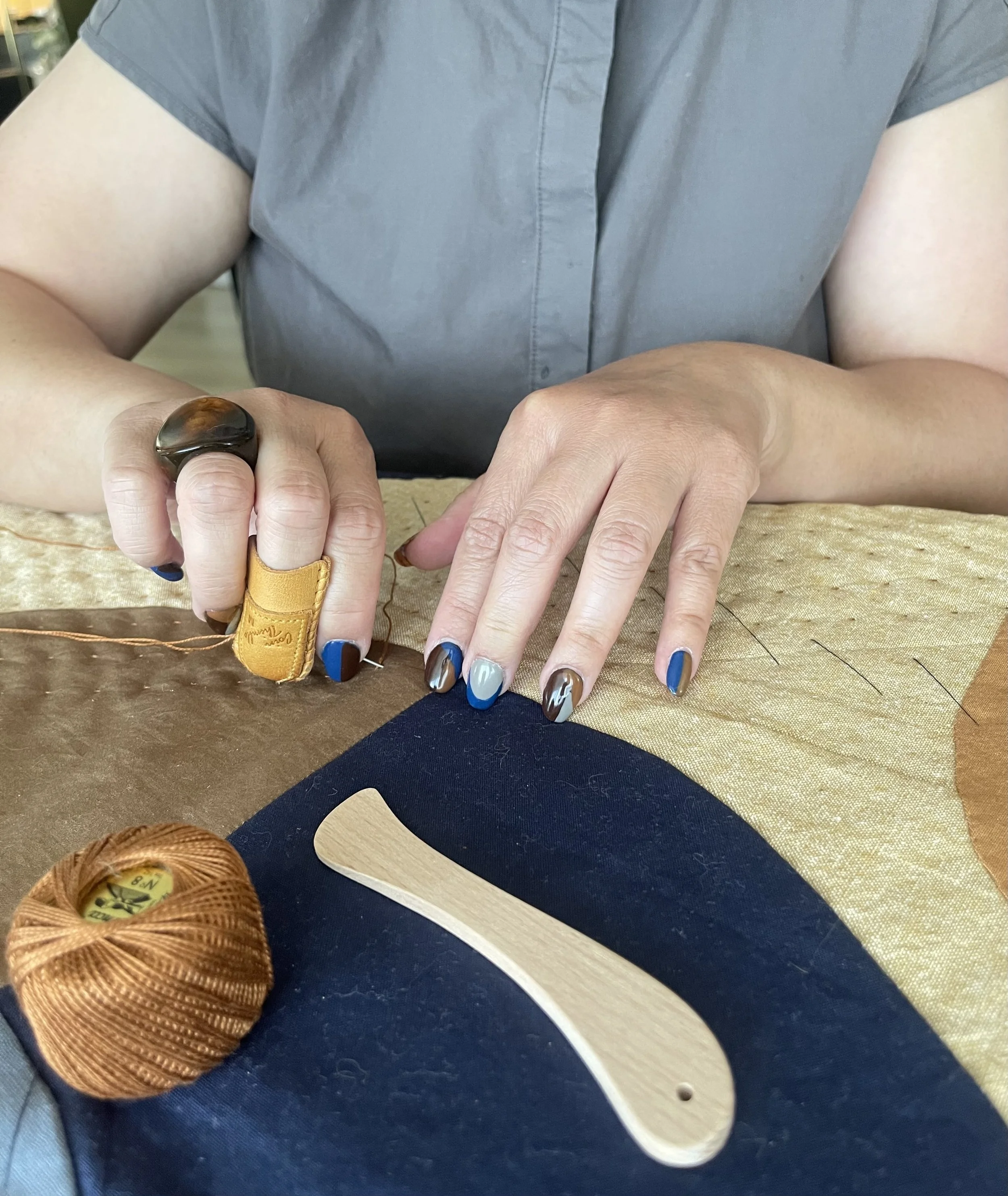
Slowness is often misunderstood. In a culture shaped by speed and immediacy, working slowly can appear impractical—yet within handmade practices, slowness becomes a form of intention.
It is through this pace that surfaces gain depth.
Time as Material
In handmade work, time is not separate from material. Each layer, stitch, or repeated gesture carries duration within it. Time accumulates quietly, shaping the surface in ways that cannot be replicated through acceleration.
This accumulation creates density—not in weight, but in presence. The surface holds the memory of its making.
Process as Value
The value of handmade surfaces lies not only in their appearance but in how they come into being. Decisions are made slowly, often in response to the material itself. Resistance, softness, and unpredictability guide the process.
Rather than aiming for uniformity, handmade work allows variation to remain visible. These variations become markers of attention—evidence that the surface has been considered, not produced.
Working with Intention
Slowness invites listening.It allows the artist to respond to subtle shifts—changes in texture, tension, or rhythm. This responsiveness creates surfaces that feel resolved without being rigid.
Working slowly does not mean working without direction. It means allowing direction to evolve through engagement rather than imposition.
Handmade in Contemporary Contexts
Within contemporary interiors, handmade surfaces introduce a human tempo.They soften environments shaped by precision and repetition, offering warmth without excess.
In residential, boutique, and hospitality spaces, this quality becomes especially meaningful. Slowness translates into comfort. Process becomes atmosphere.
Endurance Through Restraint
Handmade surfaces are not designed for immediacy. They do not reveal everything at once. Their strength lies in endurance—in their ability to remain relevant through repeated encounters and changing contexts.
This endurance is a quiet form of luxury. One rooted in care, material integrity, and time.
Slowness as Choice
Choosing to work slowly is a conscious decision. It reflects a commitment to presence, sensitivity, and depth. In my practice, slowness allows surfaces to emerge with honesty—free from urgency, shaped by attention.
These surfaces are not statements. They are companions—formed patiently, and meant to be lived with.
Materials remember. They carry traces of pressure, repetition, and time—quietly recording what has passed through them. Long after a gesture is made, the surface continues to hold its imprint.
In this way, material becomes more than substance.
It becomes memory.
Memory Embedded in Surface
Every material responds.
Fibers stretch and resist. Pigments settle unevenly. Layers compress, soften, or shift with touch. These responses are not neutral—they are forms of recall, storing evidence of interaction within the surface itself.
What remains visible is not a moment, but an accumulation. Memory, embedded slowly.
Process as Imprint
In handmade work, memory is inseparable from process.
Repetition leaves rhythm. Pressure leaves density. Pauses leave space. Each decision—whether deliberate or intuitive—registers within the material.
These imprints are not symbolic.
They are physical, felt through texture, depth, and variation. The surface becomes a quiet archive of its own becoming.
Beyond Narrative
Material memory does not tell a story in linear terms.
It does not explain or illustrate. Instead, it offers resonance—an emotional weight without narrative specificity.
This openness allows the work to remain receptive. Memory is not imposed; it is shared. The viewer brings their own experience into dialogue with what the material holds.
Time, Repetition, and Presence
Memory is formed through return.
Through gestures repeated, layers built, surfaces revisited. Time is not marked by speed, but by duration—the willingness to stay with a material long enough for it to change.
This duration gives the work presence.
Not the presence of spectacle, but of familiarity. A sense that something has been held, shaped, and allowed to settle.
Material in Space
Within an interior, material memory shapes atmosphere.
Surfaces with depth absorb light differently, soften transitions, and ground a space emotionally. They introduce continuity—connecting the present moment with what has already occurred.
In this way, material memory extends beyond the artwork.
It becomes part of the space’s lived experience.
Holding What Remains
What materials are remembered is not fixed.
Memory shifts with light, proximity, and time. It remains open, responsive, and incomplete.
This openness is essential.
It allows the work to continue living—quietly accumulating meaning through use, presence, and return.
Material does not forget.
It waits.
5. Material as Memory ( 2025 )
6. When Art Lives with Space ( 2025 )
Art is rarely experienced in isolation.
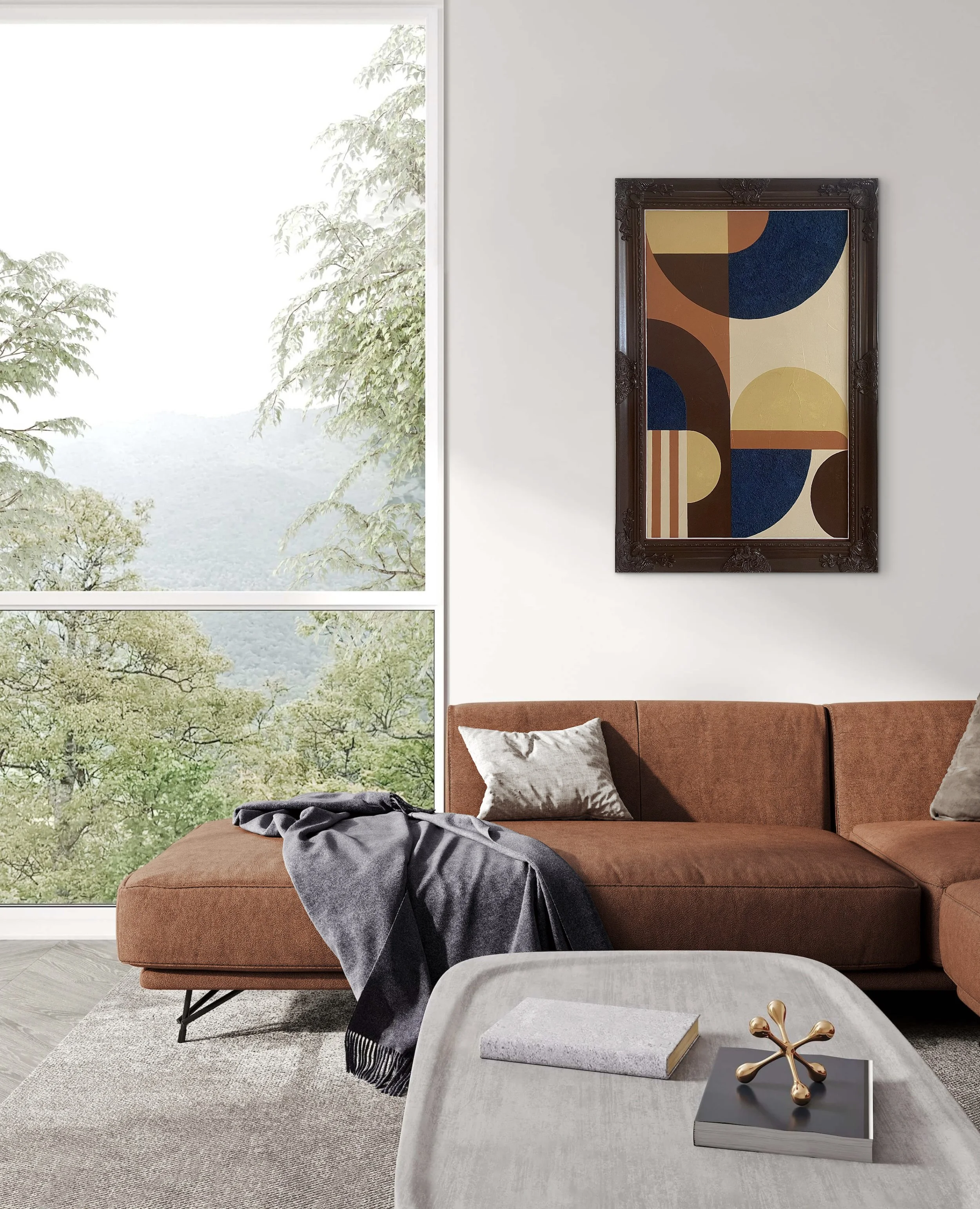
Once placed within a space, it begins to respond—to light, scale, movement, and the quiet rhythms of daily life. In this relationship, art shifts from object to presence.
It begins to live with space.
From Object to Environment
Within an interior, art becomes part of an ecosystem.
Walls, floors, furnishings, and circulation all influence how a work is perceived. Distance changes. Light shifts. The work is encountered repeatedly, often without conscious attention.
This repetition deepens familiarity.
Art is no longer something observed occasionally—it becomes something lived with.
Scale, Proportion, and Placement
How art relates to space matters as much as the work itself.
Scale determines whether a piece feels grounded or peripheral. Placement influences rhythm—how the eye moves, pauses, and returns.
When considered carefully, art does not interrupt a space.
It aligns with its proportions, supporting balance rather than asserting dominance.
Light as Collaborator
Light completes the work.
Natural and artificial light alter texture, deepen relief, and shift tone throughout the day. Shadows become part of the composition, extending the artwork beyond its physical edges.
This collaboration between art and light allows the work to evolve—never fixed, never static.
Art and Daily Rhythm
Living with art means encountering it within routine.
Passing moments, quiet pauses, transitional spaces—these become opportunities for subtle engagement. The artwork does not demand focus; it offers continuity.
In this way, art supports atmosphere.
It shapes how a space feels over time rather than how it appears at first glance.
Spatial Sensitivity in Contemporary Interiors
In contemporary residential and hospitality environments, sensitivity to space is essential.
Art must coexist with function, movement, and use. Works that understand restraint integrate more naturally—adding depth without visual noise.
This integration allows art to contribute quietly, reinforcing the identity of a space without overwhelming it.
Belonging
When art lives with space, it belongs.
Not through permanence alone, but through responsiveness—adapting to light, scale, and the lives that unfold around it.
This belonging is intentional.
It reflects an approach to art that values presence over display, and experience over immediacy.
7. The Role of Art in Quiet Interiors ( 2025 )
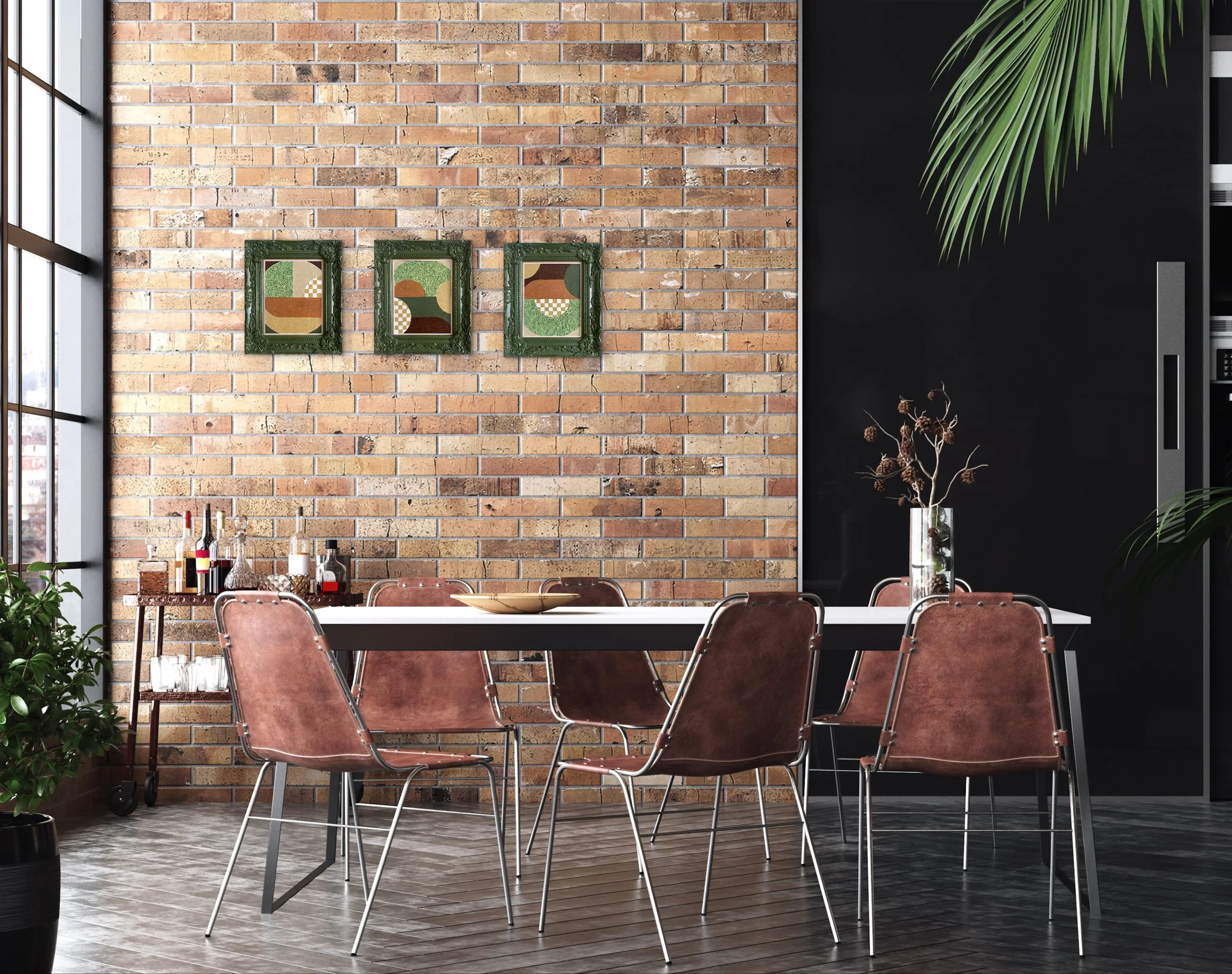
Quiet interiors are shaped by restraint.
They rely on balance, proportion, and atmosphere rather than visual excess. Within these spaces, art plays a subtle yet essential role—not as a focal point, but as a stabilizing presence.
Art, here, is not decoration.
It is part of the architecture of calm.
Beyond the Statement Piece
Not every interior benefits from a dominant artwork.
In spaces designed for rest, reflection, or extended use, statement pieces can overwhelm rather than support.
Quiet interiors call for works that understand nuance—art that holds space without asserting itself. These works allow the environment to breathe, contributing depth without visual interruption.
Supporting Atmosphere Through Art
Atmosphere is cumulative.
It is shaped by light, material, acoustics, and movement. Art contributes to this accumulation by grounding the space emotionally.
Textured surfaces soften transitions. Calm compositions slow visual tempo. Together, these elements create continuity—allowing the interior to feel cohesive rather than curated.
Art as Spatial Anchor
In restrained interiors, art often serves as an anchor.
It provides orientation, offering a point of return for the eye without demanding attention. This anchoring effect brings stability, especially in spaces with open layouts or minimal furnishings.
Rather than directing movement, the artwork supports it—remaining present without interruption.
Hospitality and the Experience of Return
In hospitality environments, quiet art gains additional meaning.
Guests encounter spaces repeatedly, often in moments of rest or transition. Art that reveals itself slowly enriches these encounters, building familiarity rather than novelty.
This familiarity fosters comfort.
The space feels considered, intentional, and human.
Choosing Art for Longevity
Quiet interiors are designed to endure.
Art selected for these spaces must share this quality—remaining relevant beyond trends or immediate impact.
Works rooted in texture, proportion, and material sensitivity tend to age gracefully. They adapt to changing light, use, and context, continuing to support the space over time.
A Subtle Partnership
The relationship between art and quiet interiors is collaborative.
Art listens to space, responding to its scale, rhythm, and function. In return, the space allows the work to settle naturally.
This partnership creates environments that feel calm, grounded, and complete—without needing to explain themselves.
8. On Creating Art That Rests with the Eye ( 2025 )
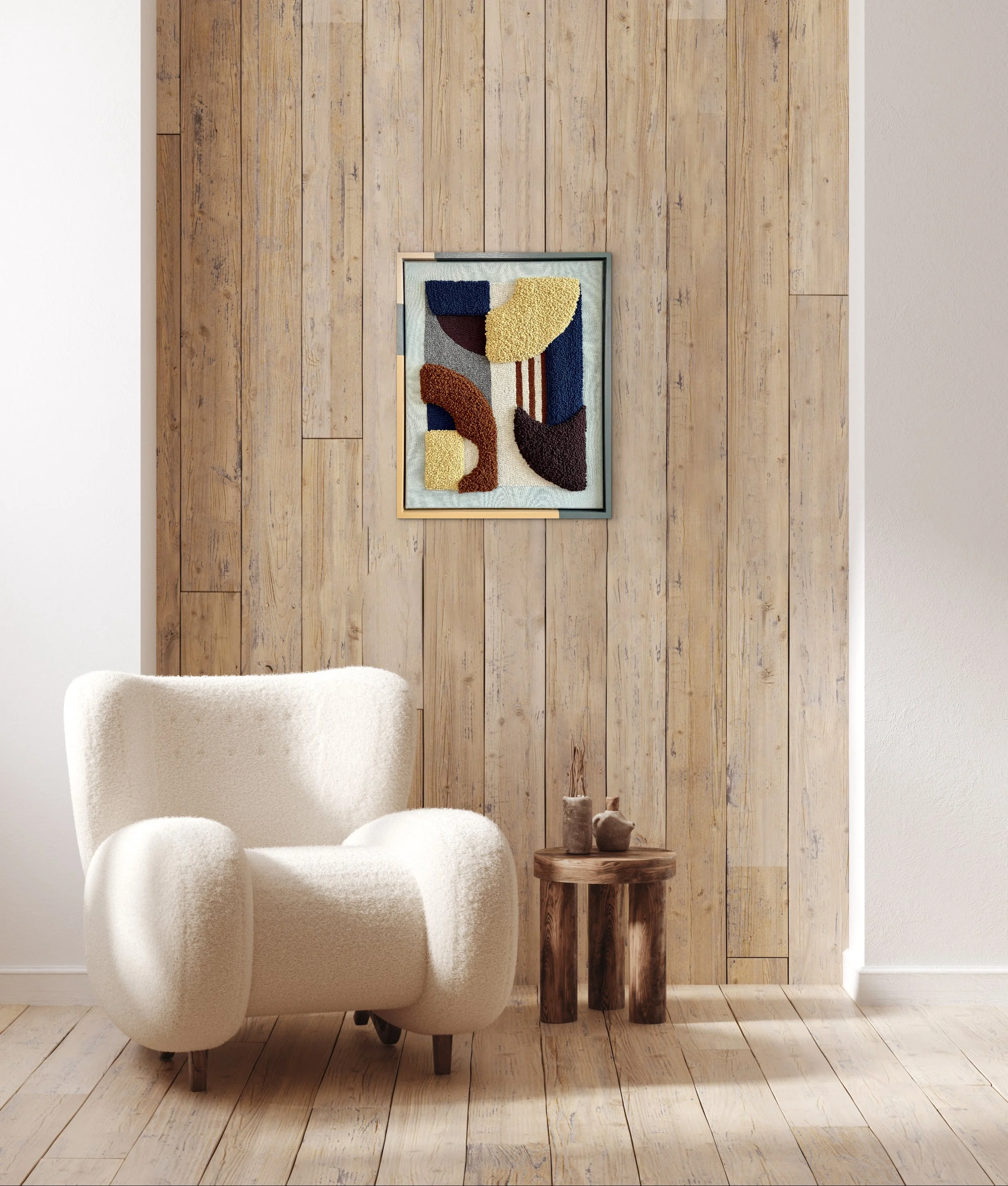
Restfulness in art is rarely accidental.
It emerges through restraint—through choices that favor balance over contrast, and continuity over impact. Art that rests with the eye invites pause rather than reaction.
It allows attention to settle.
The Difference Between Attention and Engagement
Attention is immediate.
Engagement unfolds over time. While attention is often drawn by contrast or scale, engagement relies on subtlety—on works that reward return rather than first glance.
Art that rests with the eye does not compete for focus.
It remains present, allowing the viewer to approach and withdraw without demand.
Composition as Quiet Guidance
Composition shapes experience.
When elements are measured and considered, the eye moves naturally—finding rhythm instead of interruption. Soft transitions, balanced spacing, and calm geometry work together to slow visual tempo.
This guidance is gentle.
It supports the eye without directing it.
Color, Texture, and Restraint
Restful art often relies on limited palettes.
Color is used sparingly, allowing texture and form to carry depth. Subtle tonal shifts replace contrast, creating surfaces that feel cohesive rather than segmented.
Texture adds complexity without noise.
It holds interest quietly, offering variation without agitation.
Living with Art Over Time
Art that rests with the eye reveals its value through duration.
It remains relevant as surroundings change—furniture moves, light shifts, routines evolve. Its presence adapts rather than resists.
This adaptability is essential in spaces designed for living, working, or gathering. Restful art supports these rhythms without interruption.
Aesthetic Responsibility
Choosing to create restful art is a responsibility.
It requires discipline—to stop before excess, to listen to space, and to trust subtlety. These decisions shape not only how the work appears, but how it is experienced daily.
Restfulness, in this sense, is not absence.
It is balance.
Quiet Continuity
Art that rests with the eye becomes part of a space’s continuity.
It does not define a moment, but supports many. Through repetition and return, it becomes familiar—steady, grounding, and enduring.
This quiet continuity is at the core of my practice.
9. Between Fine Art and Surface ( 2025 )
The boundary between fine art and surface is often subtle.
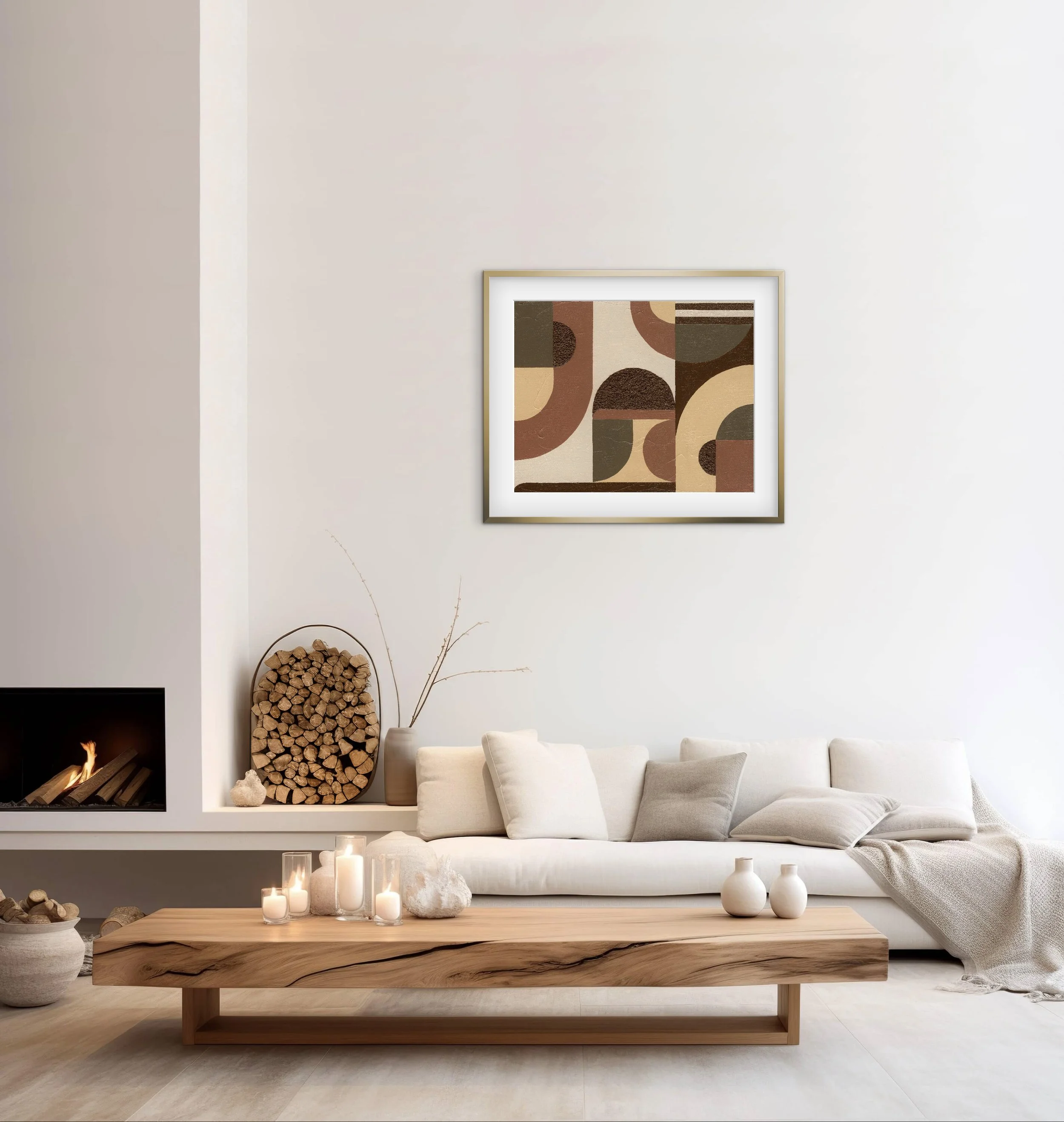
When art begins to interact with walls, textiles, and architecture, it shifts—from something viewed to something inhabited. This in-between space is where much of my practice resides.
It is not a transition away from art, but an expansion of it.
From Object to Environment
Fine art traditionally exists as an object—contained, framed, and distinct.
Surface, on the other hand, belongs to the environment. It surrounds, supports, and shapes experience.
Working between these modes allows art to extend beyond its edges. A work no longer ends at the frame; it enters the room, influencing scale, rhythm, and atmosphere.
Material as Connector
Material bridges art and surface.
Fiber, pigment, and texture carry continuity across formats—whether on canvas, textile, or wall. This consistency allows the work to shift context without losing integrity.
Rather than adapting the work to fit a space, the material invites the space into the work.
Scale and Integration
Scale transforms perception.
When art expands into surfaces, it moves from focal point to field—affecting how a space is experienced as a whole. Integration replaces emphasis. Continuity replaces contrast.
This shift requires restraint.
Surface-based works must support movement and function, aligning with architecture rather than competing with it.
A Hybrid Language
Hybrid practice demands clarity of intention.
Fine art informs sensitivity and depth. Surface work introduces responsibility—to space, use, and longevity. Together, they form a language that is both expressive and considered.
This balance allows the work to remain grounded, even as it adapts.
Working with Designers and Spaces
Collaboration becomes essential within this in-between space.
Dialogue with interior designers, architects, and clients ensures that the work responds appropriately—honoring both artistic vision and spatial context.
The goal is not visibility, but coherence.
Continuity Across Contexts
Whether existing as a singular artwork or as part of an interior surface, the intention remains constant: to create works that support calm, material presence, and quiet rhythm.
This continuity defines the practice.
It allows art to move fluidly—between object and environment—without losing its voice.